
Succession Planning for Leadership Roles: Cultivating a Culture That Can Actually Endure
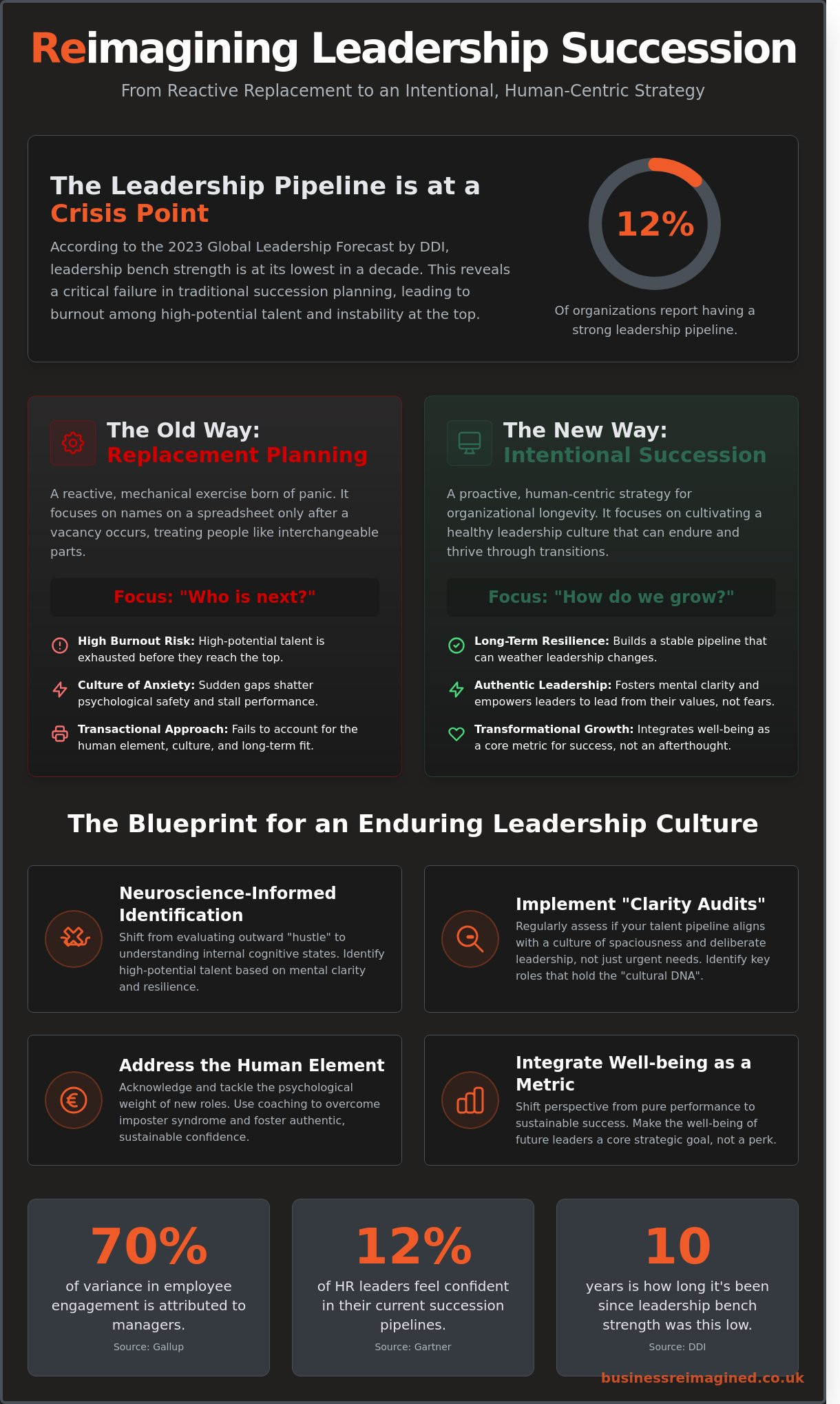
According to the 2023 Global Leadership Forecast by DDI, leadership bench strength is at its lowest point in a decade, with only 12% of organizations reporting a strong pipeline. This gap reveals a quiet truth. Most traditional approaches to succession planning for leadership roles are merely mechanical replacement exercises that fail to account for the human element. We often focus on names on a spreadsheet while our high-potential talent burns out before they ever reach the top. You likely feel the weight of this uncertainty, knowing that a vacant seat in the C-suite is more than a logistical hurdle; it's a threat to the peace of mind you've worked so hard to build.
Success shouldn't feel like a frantic race to fill a gap. It's possible to build a leadership environment that supports long-term success without sacrificing the well-being of your future leaders. In her book, Overcome Imposter Syndrome, Kay Tear highlights how understanding your mind is essential to leading authentically. This internal alignment is the foundation of a leadership culture that can actually endure. You'll discover how to move beyond mechanical checklists to build a framework rooted in mental clarity and intentional talent development. We'll explore how to identify true leadership qualities and create a transition process that feels steady, purposeful, and deeply human.
Key Takeaways
- Learn how to transition from reactive replacement to a strategy of succession planning for leadership roles that prioritizes intentional growth and long-term organizational health.
- Discover how a neuroscience-informed approach helps identify high-potential talent by focusing on mental clarity rather than traditional, noise-heavy assessments.
- Understand how to implement "Clarity Audits" to ensure your talent pipeline is deeply aligned with a culture of spaciousness and deliberate leadership.
- Explore the "Quiet Rebel" approach to addressing the psychological weight of new roles, drawing on insights from Kay Tear’s Overcome Imposter Syndrome to foster authentic confidence.
- Shift your perspective toward cultivating a leadership culture that can actually endure by integrating well-being as a core strategic metric for future success.
Beyond Replacement: Why Succession Planning for Leadership Roles Requires a New Lens
Traditional business often treats leadership like a game of musical chairs. When a seat becomes empty, the music stops and a frantic scramble begins. True Succession planning is different. It isn't a reactive emergency plan; it's a proactive, human-centric strategy designed for organizational longevity. It requires us to look at our teams not as a collection of functions to be filled, but as a living community that needs consistent nourishment to thrive over the long term.
Many organizations fall into the trap of "Replacement Planning." This approach is transactional and often born of panic. It focuses on the "who" only after the "gone" has happened. In contrast, succession planning for leadership roles reimagined is intentional. It focuses on building a healthy leadership culture that can actually endure. When a leadership void occurs, the cost is rarely just financial. According to a study by Gallup, managers account for at least 70% of the variance in employee engagement scores. A sudden gap or a poor fit shatters psychological safety, stalling performance and creating a culture of anxiety that can take years to repair.
To better understand how leadership development feeds into this process, watch this helpful video:
The Shift from Transactional to Transformational
Filling a role is a temporary fix. Securing the future is a transformational act. This shift requires a level of mental clarity that is often missing in high-pressure environments. When we prioritize "spaciousness" in our strategic planning, we move away from the hustle of urgent hiring and toward the quiet authority of talent cultivation. Working with an expert through professional leadership guidance helps leaders step back and view their legacy through a lens of alignment rather than just achievement. It's about moving from "who is next?" to "how do we grow?"
Identifying the Vital Roles
Succession isn't just for the C-suite. We must map the roles that hold the "cultural DNA" of the organization. These are the critical influence points where a vacancy would disrupt the rhythm of the entire team. A "clarity-first" assessment helps identify these pivots. It's about recognizing that authentic leadership isn't a title; it's a way of being. As Kay Tear explores in her book, Overcome Imposter Syndrome: Understand your Mind to Break Free from Self-Doubt, Lead Authentically, and Accelerate Your Career, true leadership emerges when people feel empowered to lead from their values rather than their fears. By identifying these cultural anchors early, we ensure a leadership environment that supports long-term success.
Identifying Future Leaders: A Neuroscience-Informed Approach to High Potential
Traditional methods for identifying talent often prioritize the loudest voices or those who exhibit the most visible "hustle." This approach is flawed. A 2023 study by Gartner revealed that only 12% of HR leaders feel confident in their succession pipelines. We miss hidden gems because we confuse activity with impact. Effective succession planning for leadership roles requires a shift from evaluating outward metrics to understanding internal cognitive states. We must look for individuals who possess high mental clarity and low mental noise. These are the people who remain grounded when the environment becomes chaotic.
The Biology of Better Decision-Making
Strategic foresight is not a personality trait; it's a neurological capability. When we examine leadership development neuroscience, we find that the most effective leaders have highly regulated nervous systems. A calm brain allows the prefrontal cortex to function at its peak, facilitating complex problem-solving and empathy. Those who rely on succession management services often realize that internal continuity depends on this specific type of mental resilience. When mental noise is high, leaders react out of fear or ego. When it's low, they respond with intentionality. You can learn more about how the brain manages these states in our .
Beyond the CV: Traits of a 'Reimagined' Leader
We need to embrace subtractive psychology. Instead of asking what a candidate can add, we should ask what they are willing to let go of. Can they release the need for constant validation? Can they subtract the frantic urgency that often masks a lack of direction? Presence is a far more reliable predictor of success than a CV filled with "grind" culture achievements. We're looking for grounded authority, a quality that allows a leader to stabilize their team during transitions.
In her book, "Overcome Imposter Syndrome," Kay Tear highlights how understanding the mind's mechanics allows leaders to lead authentically without the burden of self-doubt. This internal alignment is what creates a leadership culture that can actually endure. It's about finding people who value the health of the organization as much as their own progress. If you're ready to look deeper into your talent pool, you might find it helpful to book a brief conversation to explore new ways of identifying potential.
How to Build a Leadership Development Plan: A Step-by-Step Guide
Effective succession planning for leadership roles requires a shift from reactive replacement to intentional cultivation. This transition is not about speed; it is about creating a leadership culture that can actually endure. By following these five steps, you move away from the anxiety of the "talent gap" toward a sense of quiet confidence.
- Step 1: Define future requirements. Start by asking what your culture needs to remain human-centric three years from now. Do not just list technical skills. Focus on the qualities that will sustain the team's spirit during seasons of change.
- Step 2: Conduct 'Clarity Audits'. Move beyond surface-level performance reviews. A 2023 Gartner study found that only 17% of HR leaders believe their succession pipelines are robust enough to meet future needs. Audits help bridge this gap by identifying true alignment between personal values and organizational purpose.
- Step 3: Design bespoke programmes. Focus on the leader's internal state. Understanding the psychological nuances of growth is essential. In her book, "Overcome Imposter Syndrome", Kay Tear highlights how understanding your mind allows you to lead authentically and break free from self-doubt.
- Step 4: Implement transition accelerators. Provide structured support during the first 100 days. This prevents the high failure rate often seen in new executive placements, which Harvard Business Review identifies as a critical risk period for leadership transitions.
- Step 5: Measure success through well-being. Track the health of the team and the retention of cultural values. Success isn't just a filled seat; it's a leader who thrives without burning out.
Crafting the Talent Pipeline
A healthy leadership culture thrives when the pipeline is a source of renewal, not a conveyor belt of exhaustion. You can integrate High potential talent programmes into daily operations without triggering hustle fatigue. This involves creating spaciousness for learning within the work week. When development is woven into the fabric of the day, the pipeline remains fluid and responsive to the inevitable shifts in the business environment.
The Role of Mentorship and Coaching
Technical training teaches a person how to do the job; leadership coaching teaches them how to be the person the job requires. External coaching is vital because it offers a neutral ground, away from internal politics. It allows future leaders to explore their vulnerabilities without judgment. Setting milestones that value sustainable growth ensures that succession planning for leadership roles results in steady, grounded leaders who prioritize long-term health over immediate, frantic results.
The Human Element: Addressing Imposter Syndrome in Successors
Stepping into a high-level role carries a psychological weight that spreadsheets and organizational charts cannot capture. We often treat succession planning for leadership roles as a purely tactical exercise, yet the internal transition is where the real work begins. When a successor moves into a position of significant influence, they don't just inherit a desk; they inherit the expectations, ghosts, and pressures of those who came before them. This shift frequently triggers a sense of being an interloper, regardless of their actual competence.
Traditional "confidence building" often fails because it focuses on adding more mental noise. It encourages leaders to "fake it" or perform a version of authority that feels hollow. This creates a frantic internal environment. We advocate for the "Quiet Rebel" approach. Instead of shouting over self-doubt, this method involves grounding oneself in intentionality and alignment. When a leader stops trying to mimic their predecessor, they find a spaciousness that allows them to lead from a place of genuine presence rather than performance.
Breaking Free from Self-Doubt
The mind is a powerful architect of both success and limitation. In her book, Overcome Imposter Syndrome, Kay Tear explores how understanding the mind is key to leading authentically. She posits that breaking free from self-doubt isn't about eliminating it entirely, but about changing your relationship with it. This allows for the development of "Quiet Authority," where leadership is rooted in calm conviction rather than external validation. You can read more about these transformative patterns on Kay Tear's LinkedIn to help your successors lead with clarity.
Creating a Safe Transition Space
New leaders frequently navigate a "Double Bind." They are expected to bring fresh innovation while simultaneously preserving the legacy of the past. This tension can be paralyzing. According to data from Egon Zehnder, 80% of leaders find the transition into a new role more difficult than they originally anticipated. This is why transition coaching is vital during the first 90 days. It provides a sanctuary where the new leader can reimagine the role without the pressure of immediate perfection.
A healthy leadership culture that can actually endure is one that invites vulnerability. It recognizes that succession planning for leadership roles is a human process, not a mechanical one. By fostering an environment where leaders can be honest about their learning curve, you build a foundation of trust that supports long-term success. Success is not a destination; it's a state of alignment that requires constant, gentle nurturing.
Is your organization ready to move beyond hustle culture and build a legacy of intentional leadership? Explore our strategic partnership services to support your next generation of visionaries.
Cultivating a Leadership Culture That Can Actually Endure
Effective succession planning for leadership roles is not a final destination. It is a steady, intentional rhythm that pulses through the heart of an organisation. When we view leadership as a living environment that supports long-term success, we move away from the frantic search for a replacement and toward a natural evolution of talent. This continuity ensures that the values of the business remain grounded, even as the faces in the boardroom change over time.
Longevity requires more than just a seat at the table; it requires the mental and emotional capacity to stay there. Our Clarity Wellbeing Programme plays a vital role in this process. By prioritising the internal alignment of your current team, you create a space where leaders can mentor others without the weight of burnout. It's about ensuring your most experienced voices have the spaciousness to pass on their wisdom before they depart, rather than rushing toward the exit in a state of exhaustion.
The Metrics of a Healthy Culture
How do you measure the invisible? In a healthy leadership culture, we track spaciousness by looking at the time leaders spend on strategic reflection versus reactive fire-fighting. We also look at alignment; how closely do the personal values of your emerging leaders mirror the core mission of the business? Research from Korn Ferry indicates that organisations with robust succession processes see significantly higher retention rates, as employees feel a clear and supported path for their own growth.
Authenticity is the thread that holds this culture together. Many high-potential leaders hesitate to step forward because they feel like imposters in a high-pressure environment. Addressing these internal barriers is essential for a leadership culture that can actually endure, a topic explored deeply in the book Overcome Imposter Syndrome by Kay Tear. When leaders lead from a place of genuine self-awareness, the entire environment becomes resilient enough to survive any transition.
Next Steps for Your Organisation
If you're ready to move beyond traditional hustle models and embrace a more intentional approach to succession planning for leadership roles, let's begin a conversation. You can book a discovery call to discuss your specific pipeline and how we can support your team's growth. To see how our philosophy translates into action, explore our full range of Leadership Development Programmes. Join us in the quiet revolution where business is reimagined to be as sustainable as it is successful.
Designing a Legacy of Intentional Leadership
Effective succession planning for leadership roles is far more than a strategy for continuity; it's an invitation to build a leadership culture that can actually endure. By integrating neuroscience-backed clarity and addressing the internal weight of self-doubt, you ensure your future leaders don't just fill a seat, they lead with presence. As Kay Tear suggests in Overcome Imposter Syndrome, understanding the mind is essential to break free from self-doubt and lead authentically. Since 2011, we've helped organizations realize that sustainable success requires a shift from frantic replacement to intentional cultivation. Research from Deloitte (2023) shows that only 14% of companies feel they have a strong leadership pipeline, proving that the traditional approach is no longer enough. Led by international speaker Chantal Burns, we bring over a decade of transformation experience to help you find clarity. It's time to trade the hustle for alignment and create a leadership environment that supports long-term success.
Reimagine your leadership pipeline with Business Reimagined
You've built something remarkable. Now, let's ensure it has the space to grow beautifully and intentionally for years to come.
Frequently Asked Questions
What is the difference between succession planning and replacement planning?
Replacement planning is a reactive measure designed to fill a sudden vacancy, while succession planning for leadership roles is a proactive strategy focused on long-term development. A 2023 study by Deloitte revealed that only 14% of leaders feel their organizations do succession planning effectively. While replacement focuses on immediate survival, succession ensures a leadership culture that can actually endure by preparing talent for the complexities of the future.
How do you identify high-potential employees for leadership roles?
Identification goes beyond tracking sales targets or output; it requires looking for learning agility and emotional resonance. Research from the Harvard Business Review suggests that 70% of high performers lack the specific attributes needed to succeed at the next level of leadership. We prioritize individuals who demonstrate deep alignment with organizational values and a capacity for reflective, intentional decision-making rather than those who simply embrace the traditional hustle.
How far in advance should succession planning for leadership roles begin?
The most resilient organizations begin the process 3 to 5 years before a planned transition occurs. A 2022 report by Gartner found that it takes an average of 18 months for a new executive to find their rhythm and reach full productivity. Starting early provides the necessary spaciousness for a gentle transition, allowing the successor to integrate slowly and with clarity.
What are the common mistakes in leadership succession planning?
The most frequent error is treating succession as a rigid, top-down mandate rather than a human-centric conversation. In her book, "Overcome Imposter Syndrome: Understand your Mind to Break Free from Self-Doubt, Lead Authentically, and Accelerate Your Career," Kay Tear explains how internal self-doubt can hinder even the most skilled leaders if it isn't addressed. Failing to support the psychological well-being of candidates contributes to a 50% failure rate for new executives within their first 18 months.
Can executive coaching accelerate the succession planning process?
Executive coaching acts as a catalyst by providing a grounded space for leaders to explore their authentic style. Data from the International Coaching Federation (ICF) shows that 86% of companies see a positive return on their investment in coaching. It helps candidates move past the noise of the marketplace to find the clarity needed to lead a leadership environment that supports long-term success.
How do you handle internal competition during succession planning?
Managing internal competition requires a shift from a scarcity mindset to one of collective alignment. When 43% of employees report feeling undervalued, according to a 2023 Achievers report, transparency becomes the most vital tool for peace. By fostering a culture where every role is seen as a meaningful part of the whole, you ensure that the process doesn't fracture the team but instead strengthens the internal bond.
How do you measure the ROI of a leadership development plan?
You measure ROI by looking at the reduction in external hiring costs and the stability of your leadership culture. Research from CAP suggests that replacing a senior executive can cost up to 213% of their annual salary. By tracking internal promotion rates and long-term retention, you can quantify the financial and emotional value of maintaining a leadership culture that can actually endure.
What role does the current CEO play in succession planning?
The CEO serves as the primary architect of the transition, acting with the wisdom of a mentor rather than the urgency of a manager. A 2021 PwC study found that companies with CEO-led succession plans achieve 10% higher shareholder returns over time. Their role is to step back intentionally, creating the spaciousness for the next leader to emerge while ensuring the organization's core mission remains steady and whole.